


Best Eco-Friendly Travel Mugs 2026: Sustainable Sips

Table of Contents
What Makes an Eco-Friendly Travel Mug Worth Choosing
Stainless Steel Travel Mugs: Durability Meets Sustainability
Why Recycled Stainless Steel Matters
Plastic-Free Travel Mugs: Material Alternatives That Work
Glass and Ceramic Options for Zero-Waste Commutes
Travel Mug Materials Comparison: Finding Your Best Match
How to Clean a Travel Mug and Extend Its Lifespan
The Weekly Deep Clean
Dishwasher Versus Hand Washing: What Actually Wears Out
Preventing Odors and Stains
Long-Term Wear: What to Watch For
Replacement Parts Are the Real Lifespan Extender
Performance Features That Matter: Insulation, Leaks, and Accessibility
Real-World Sustainability: Breaking Even on Environmental Impact
The Break-Even Model, With Assumptions Stated
Lifespan Is the Biggest Lever
Repairability and End-of-Life
What to Ask Before You Buy
Frequently Asked Questions
Last Updated: October 18, 2026
What Makes an Eco-Friendly Travel Mug Worth Choosing
Choosing eco-friendly travel mugs aligns your daily habits with your values. At loveUcoffeeMugs, we know coffee enthusiasts want drinkware that performs well and looks great.
What separates a genuinely sustainable travel mug from greenwashing? Three factors: material durability, how long it lasts before replacement, and whether it can be repaired or recycled at end-of-life. A mug that chips after six months isn't sustainable, you'll just buy another one.
The best eco-friendly travel mugs combine performance with responsible sourcing: they keep coffee hot or cold without leaking, resist odors and stains, and don't degrade with daily use.
Stainless Steel Travel Mugs: Durability Meets Sustainability
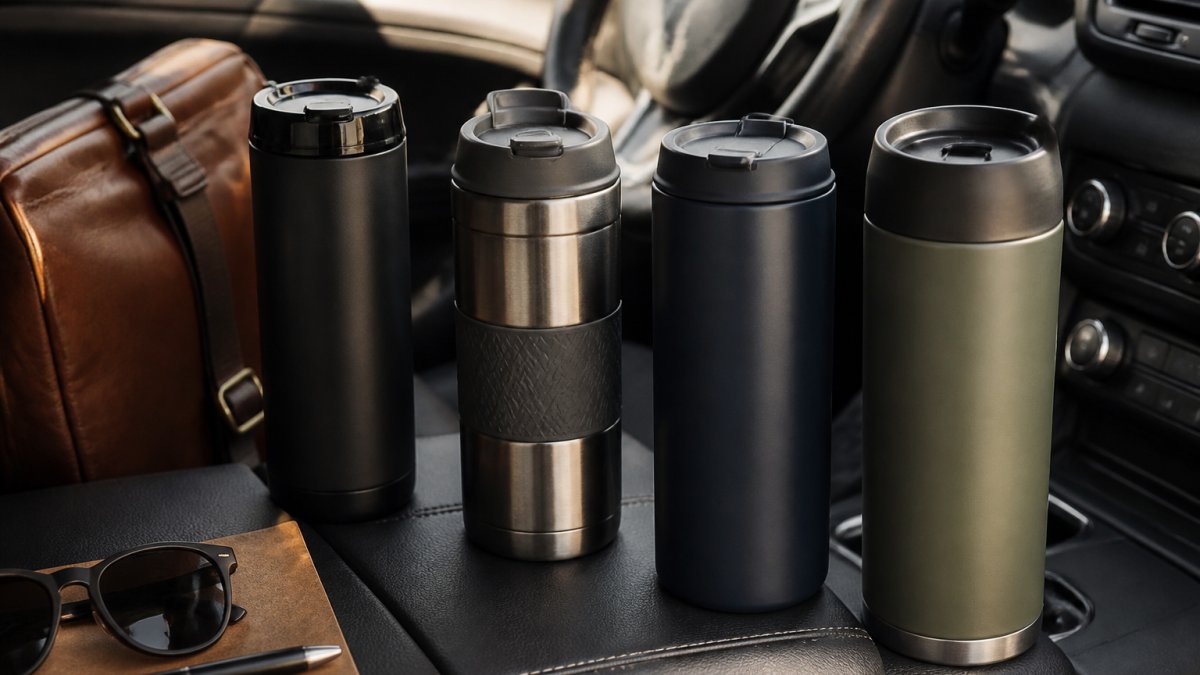
Stainless steel dominates the eco-friendly travel mug market for good reason: it's nearly indestructible, retains temperature exceptionally well, and a quality mug can last a decade or more, the foundation of true sustainability.
Double-wall insulation keeps drinks hot or cold for hours. The material is non-toxic and food-safe, resists dents, scratches, and corrosion, and is infinitely recyclable without losing quality.
The downside? Stainless steel is heavier than alternatives, which matters if you carry your mug all day.
Why Recycled Stainless Steel Matters
Recycled stainless steel is a meaningful environmental step forward. Instead of mining virgin ore, it uses material already in circulation.
When you see "recycled stainless steel" on a label, it typically means a percentage came from post-consumer or post-industrial sources.
Recycled stainless steel performs identically to virgin material, only the source differs, making it the obvious choice for environmentally conscious buyers.
Plastic-Free Travel Mugs: Material Alternatives That Work
Not every eco-friendly travel mug needs to be stainless steel. Glass and ceramic options offer distinct advantages, though each comes with trade-offs worth understanding.
Glass and Ceramic Options for Zero-Waste Commutes
Glass travel mugs appeal to people who want to see their beverage and avoid material-to-liquid contact concerns. Glass is chemically inert, nothing leaches into your drink, and fully recyclable. Quality double-wall glass mugs maintain temperature reasonably well, though not as effectively as stainless steel.
The practical challenge with glass is weight and breakage risk: it's heavier than plastic and will shatter if dropped, making it less ideal for commuters juggling bags, phones, and coffee.
Ceramic travel mugs occupy a middle ground: lighter than glass, better insulated, and tactile in a way many people prefer.
Both glass and ceramic suit stationary use, at your desk, in the car, at home, better than backpacks and commutes where durability is critical.
Travel Mug Materials Comparison: Finding Your Best Match

Choosing the right material depends on your actual use case, not just environmental ideals. Here's how they stack up:
Material | Durability | Insulation | Weight | Cost | Best For |
Stainless Steel (Recycled) | Excellent | Excellent | Moderate | Higher | Daily commuters, long-term investment |
Glass | Good | Good | Heavy | Moderate | Desk use, home brewing |
Ceramic | Moderate | Good | Light | Moderate | Casual use, aesthetics matter |
Bamboo Composite | Moderate | Fair | Light | Lower | Occasional use, budget-conscious |
Stainless steel wins for commuters who need reliability, it survives being tossed in a bag and used daily. Glass works for stable routines where the mug stays in one place; ceramic suits those who prioritize feel and looks over rugged durability.
How to Clean a Travel Mug and Extend Its Lifespan
The best eco-friendly travel mug only stays sustainable if it stays in rotation for years. Cleaning is where most mugs quietly fail, the wrong routine degrades seals, traps odor, and shortens the life of the hardest-to-replace parts.
The Weekly Deep Clean
Soak the mug in hot water and a little dish soap for 15-20 minutes, then scrub the interior with a long-handled bottle brush, especially the threading and lid underside, where coffee residue and milk fats accumulate out of sight. Rinse thoroughly and air-dry completely with the lid off before reassembling.
For stubborn stains or odors, a baking soda paste works well: mix baking soda with a little water, scrub the interior, and let it sit overnight before rinsing and washing normally. For coffee and tea stains on glass or ceramic, white vinegar is effective, fill the mug halfway with vinegar, top with hot water, and soak for an hour.
Watch Out Never seal a damp mug. Trapped moisture between the lid and body is the leading cause of musty odor and premature seal degradation. Store mugs open and dry.
Dishwasher Versus Hand Washing: What Actually Wears Out
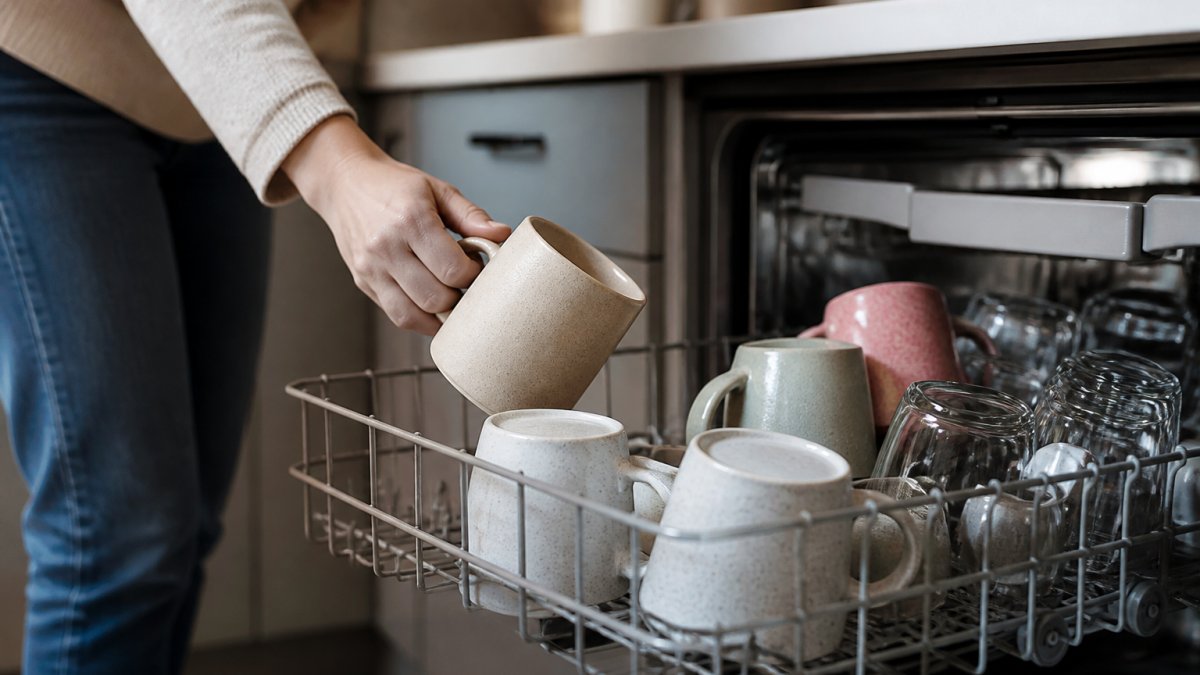
Most travel mugs are labeled dishwasher-safe, but "safe" and "long-lasting" are different claims. Heat and detergent are hardest on silicone gaskets, plastic lid components, and painted or powder-coated finishes: gaskets stiffen, lid plastics warp, and finishes chip. Hand washing the lid and gasket while running the body through the dishwasher is a reasonable compromise.
Preventing Odors and Stains
Odors develop when bacteria colonize the seal and interior surfaces, and prevention is simpler than removal. Rinse the mug immediately after use, this single habit eliminates most odor problems, and let every component air-dry fully before reassembly.
Stainless steel resists odor and stain uptake better than ceramic or bamboo composite, which are more porous. If a ceramic mug retains a smell after cleaning, a vinegar soak usually resolves it; if it persists, the glaze may be compromised.
Long-Term Wear: What to Watch For
Check these wear points periodically:
Seal rebound. A gasket that no longer springs back, feels stiff, or shows cracks will leak. Replace it before it fails in a bag.
Lid threading and hinges. Flip-top hinges and screw threads wear with grit; rinse them and avoid over-tightening.
Interior coating. Stainless steel interiors should be bare or properly finished; flaking or bubbling is a defect, not normal wear.
Exterior finish. Chipped powder coating is cosmetic on steel but can expose edges on ceramic and glass.
Odor retention. Persistent smell after a deep clean signals a degraded seal or porous interior.
Replacement Parts Are the Real Lifespan Extender
If odors or leaks persist despite cleaning, replace the seal rather than the mug. Most quality mugs sell replacement seals and lids separately, and a fresh seal can add years of service. This repairability separates a genuinely sustainable mug from one that is merely reusable, so before buying, confirm the manufacturer stocks replacement parts.
Pro Tip Keep a spare seal on hand. A part that prevents a leak-driven replacement is a valuable sustainability upgrade.
Performance Features That Matter: Insulation, Leaks, and Accessibility
Beyond materials, specific design features determine whether a mug works in daily life. A beautiful mug that leaks all over your bag is worthless, no matter how eco-friendly it is.
Temperature retention depends on double-wall insulation and seal quality.
Leak resistance comes down to the lid seal. The best travel mugs use silicone or rubber gaskets that create an airtight seal when the lid is properly closed.
Accessibility matters more than most guides acknowledge. Narrow drinking openings are uncomfortable for people with larger lips or those who wear lipstick; wide-mouth designs are easier to clean and drink from.
Real-World Sustainability: Breaking Even on Environmental Impact
How many single-use cups does a reusable mug need to replace before it breaks even environmentally? Treat any break-even claim as a model, not a fact. The answer depends on four variables: the mug's manufacturing footprint, how often you use it, how long it lasts, and whether it can be repaired instead of replaced.
The Break-Even Model, With Assumptions Stated
A defensible break-even estimate needs three inputs: the per-use footprint of the disposable cup you're replacing, the embodied footprint of the reusable mug (including material extraction, manufacturing, and shipping), and the mug's expected service life in uses.
Put those ranges together and the break-even point for a stainless steel mug commonly falls between roughly 30 and 150 uses. That wide band is the point: a daily coffee drinker reaches the low end in about a month; an occasional user might take a year. Rather than trust a single number, ask a brand for its expected lifespan, then run the arithmetic with your own usage.
Key Takeaway The break-even question is less "what is the number?" and more "what has to be true for this mug to win?" If you use it most days and keep it for years, the math is favorable. If it lives in a cabinet, no material choice saves it.
Lifespan Is the Biggest Lever
Because embodied footprint is fixed at purchase, the only variable you control afterward is total uses. Doubling a mug's service life halves its per-use footprint, which is why durability and repairability matter more than a few percentage points of recycled content.
A mug that lasts ten years of daily use spreads its manufacturing footprint across thousands of uses; one that chips, leaks, or loses its seal after a year does not, and a replacement's footprint stacks on top of the old one's. That is the core sustainability argument for stainless steel: not that its production is clean, but that it survives long enough to amortize.
Repairability and End-of-Life
A mug is only as sustainable as its weakest replaceable part. Lids, gaskets, and seals wear out first, and a mug whose seal cannot be replaced is effectively disposable even if the body is indestructible. Before buying, check whether the manufacturer sells replacement lids and seals separately, a $5-$15 seal that buys two more years is one of the highest-leverage sustainability purchases you can make.
End-of-life matters too, but less than most people assume. Stainless steel is among the most widely recycled metals, so a spent mug is more likely to be recycled than landfilled. Glass is infinitely recyclable but heavy to transport; ceramic is generally not accepted in curbside recycling; bamboo-composite and plastic-bodied mugs are hardest to recycle.
What to Ask Before You Buy
What is the expected service life, and are replacement lids and seals sold separately?
Does the lid fully disassemble for cleaning, so the seal can be maintained rather than replaced early?
Is the body recyclable in your local program, and is the material labeled?
A reusable mug is not automatically sustainable. It becomes sustainable when used often, kept long, repaired when possible, and recycled at the end. The break-even math is a tool for checking whether a given mug clears that bar for your habits, not a badge the product earns on the shelf.
Frequently Asked Questions
What is the most eco-friendly material for a travel mug?
Recycled stainless steel and glass rank highest for environmental impact. Recycled stainless steel reduces mining demand and lasts decades with proper care. Glass offers chemical inertness and infinite recyclability but weighs more. Ceramic is durable and non-toxic but heavier than alternatives. Plastic-free mugs eliminate microplastic shedding into beverages. The best choice depends on your commute distance, durability needs, and willingness to carry extra weight. Consider how long you'll use it, a mug kept for 10+ years offsets its production impact far more than one replaced every few years.
How do you clean a travel mug to prevent odors and stains?
Rinse immediately after use with hot water to prevent residue buildup. For stubborn stains, fill the mug with equal parts white vinegar and hot water, let sit for 30 minutes, then scrub with a bottle brush. Baking soda works well for odors, sprinkle 1-2 tablespoons inside, add a little water to form a paste, and let sit overnight. Most stainless steel and glass mugs are dishwasher-safe, but hand washing extends seal lifespan. Avoid abrasive scrubbers that damage interior coatings. Air-dry completely to prevent mold growth in seals.
Are reusable travel mugs worth it compared to single-use cups?
Yes, significantly. A reusable mug eliminates roughly 500+ single-use cups per year for daily commuters. Even accounting for manufacturing impact, most reusable mugs break even environmentally within 6-12 months of regular use. High-quality mugs last 10+ years, multiplying savings. The real advantage is consistency, you control the mug's lifespan and can repair or recycle it responsibly, versus single-use cups that almost always end up in landfills.
Which travel mugs keep drinks hot or cold the longest?
Double-wall insulated mugs with stainless steel construction retain temperature best. Quality designs maintain hot beverages at 140°F+ for 4-6 hours and cold drinks below 40°F for 8+ hours. Vacuum-insulated mugs outperform single-wall options by 2-3x. Thicker walls and wider base designs improve retention. Lids with minimal air gaps also matter, sealed lids reduce heat loss significantly. Glass and ceramic mugs without insulation cool faster but are still warmer than uninsulated plastic for the first 1-2 hours. Test your specific mug by timing water temperature with a thermometer under real-world conditions.
Shop

Comments